
(Oct. 4th, 2026)
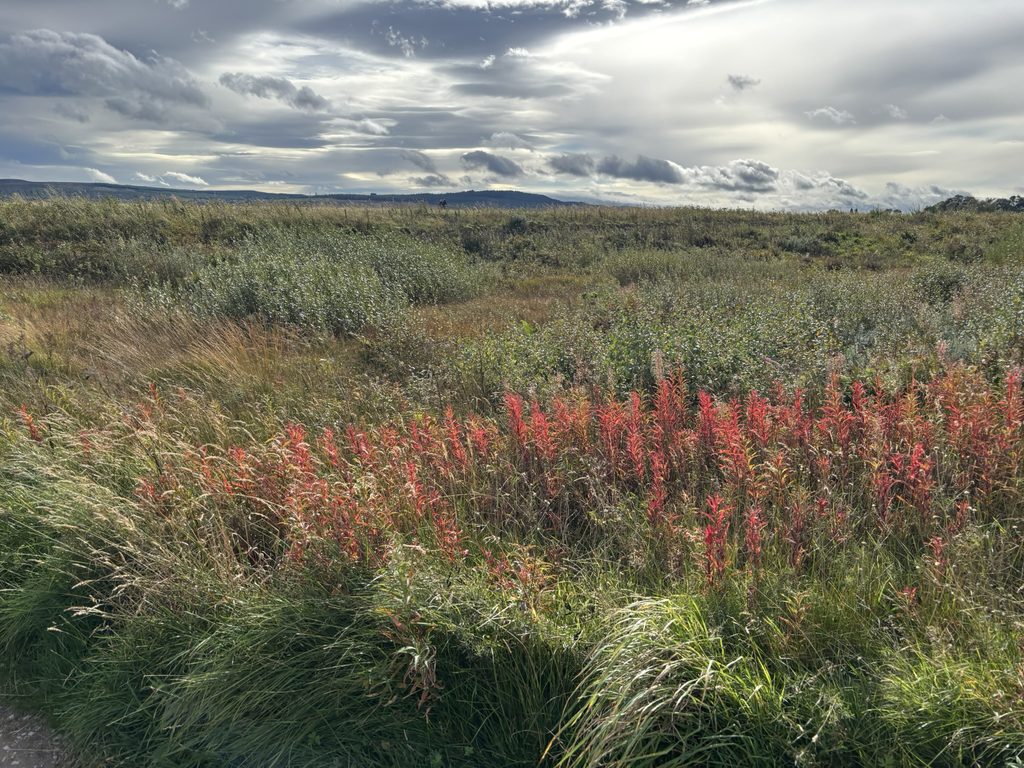
If you’re following along, if you know your Scottish history, and from the title, you probably already know where I’m at from the admittedly obscure photo above.
We pulled out of Glenmore for a bit over an hour of driving (still on the wrong side of the road, still no way I’m making it up to, or past, the max speed on these roads!) and walked into the Culloden Visitor Center about 12:45. Cheryl popped into the gift store while I sorted admission tickets. I suppose we might normally have taken some time to walk through the museum exhibits first, but I found the guided battlefield tour was on the hour, each hour, so I ran into the gift shop to get Cheryl. We hurried out the back door to catch up with the last group that had already headed out for the 1 PM tour. Sneaking up to the back of the group like tardy school children sneaking into class, we listened to a young man (I almost called him a boy… wow, I guess I am getting old) using his best loud “teacher’s voice” to project himself over the sound of the wind that gusted, threatening each time to push us off our feet. Cupping a hand behind my ear (did you say old?), then trailing behind the crowd each time he led us further into the battlefield, I (un)learned a few things.
The fourth, and final, Jacobite rebellion started formally on 19 August 1745, and ended decisively in these fields and bogs of Culloden on 16 April 1746, in less than an hour of bloody battle, effectively ending any dream of a Stuart returning to the throne. On an uncharacteristically windy Sunday, even for Scotland, we find ourselves on the Culloden battlefield, and I learned how much I didn’t know about what happened here.
I’m certain you’ve seen pictures, or watched fictionalized accounts, featuring the memorial stones erected at the places where notable Scots and English fell, where burials of specific clans, and even the English dead, are located.
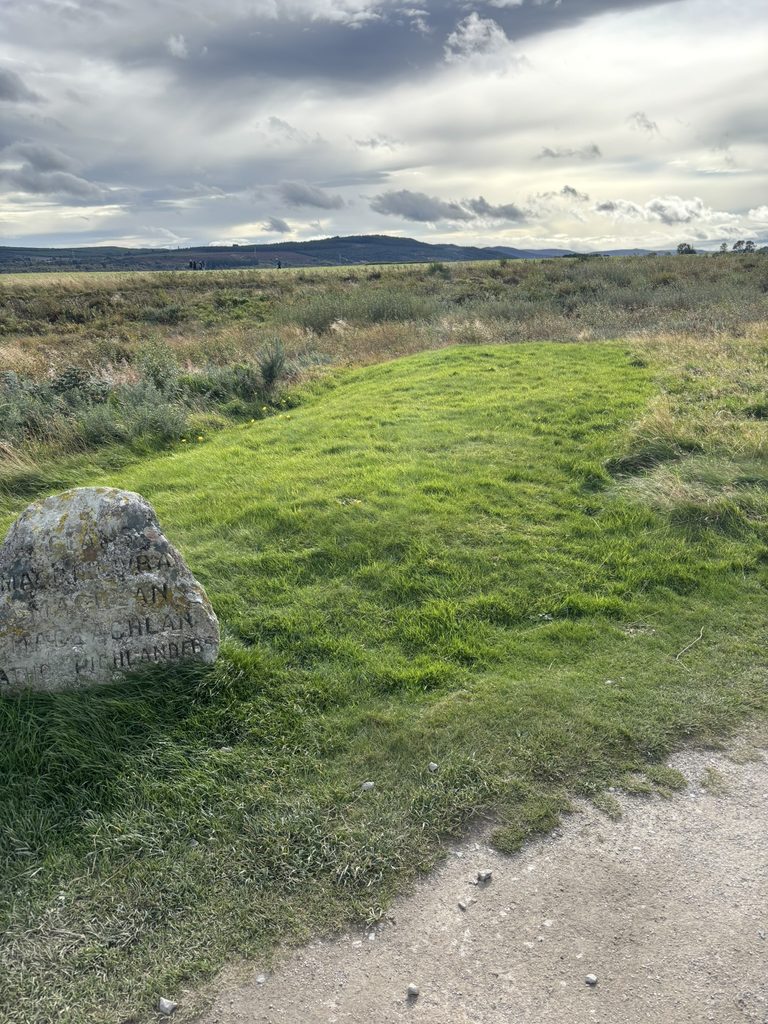
Clans Maclean, MacLachlan, Atholl Highlanders.
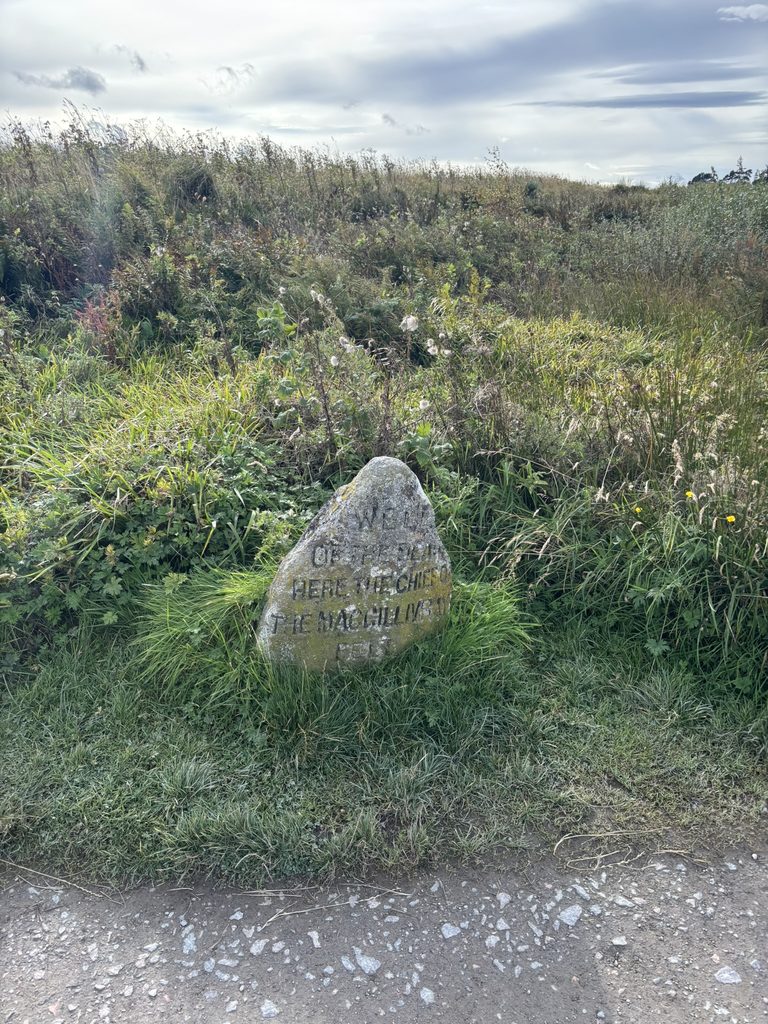
Where the “Chief of the MacGillivray’s fell”.
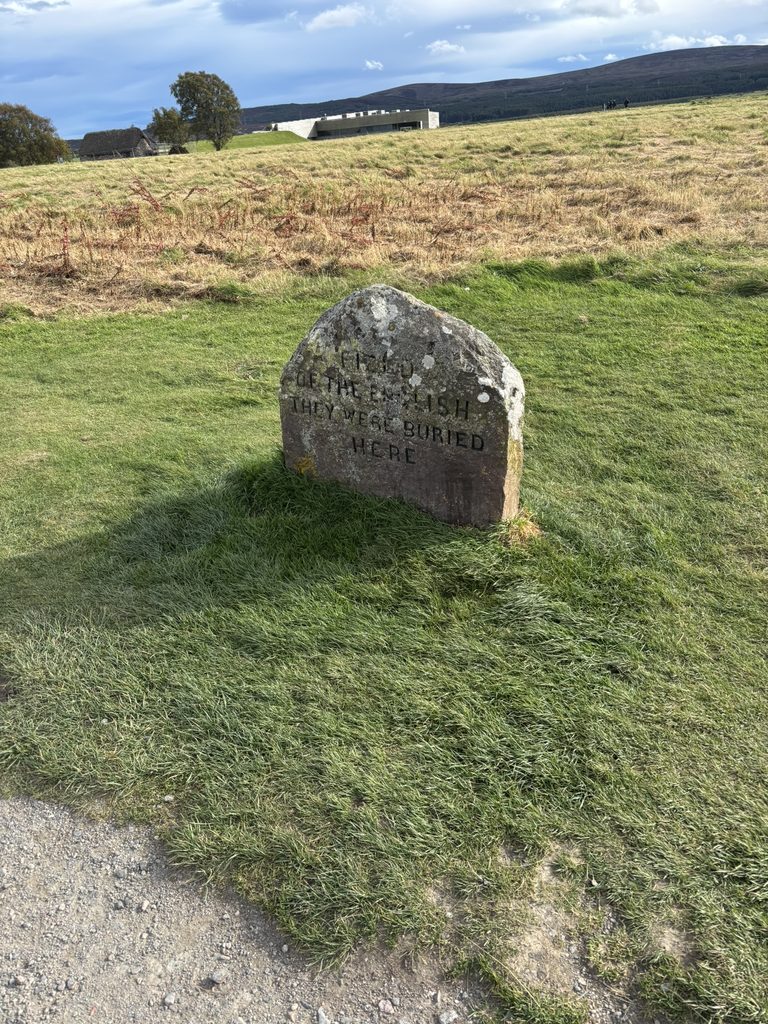
Burial place of the English.
Except they’re not.
To be sure, the mass graves of the Jacobites are real. These are designated war graves, and we were reminded of such and asked not to tread on them out of respect. But the stones were erected over 130 years later as a bit of Victorian-era hubris by one Duncan Forbes. There are hundreds of men, and likely women who accompanied the Jacobite army as well, buried under each of these low mounds. The British army made no attempt to sort and catalogue the Jacobite dead. There are Scots, Irish, British, even French buried here.
When we approached the marker for the burial of the English, our guide made a point of having us gather round the stone, because, well… they’re not buried there. Archeological scans have detected no evidence of burials in this spot. The BRITISH (as they were made up of English, Welsh, and even Scots soldiers) soldiers that fell were most likely buried another 50 yards (meters?) farther west.
The trees surrounding the field weren’t there. This field, at the time of the battle, was common grazing land. Low, boggy, even more open to the constantly blowing wind than it was today. And the battlefield as you see it today (as managed by the National Trust for Scotland) is only about one third of the true and original battlefield. NTS continues to fight to protect and preserve the areas they don’t yet own.
But the boggy grounds… that’s the same. Or at least they were.
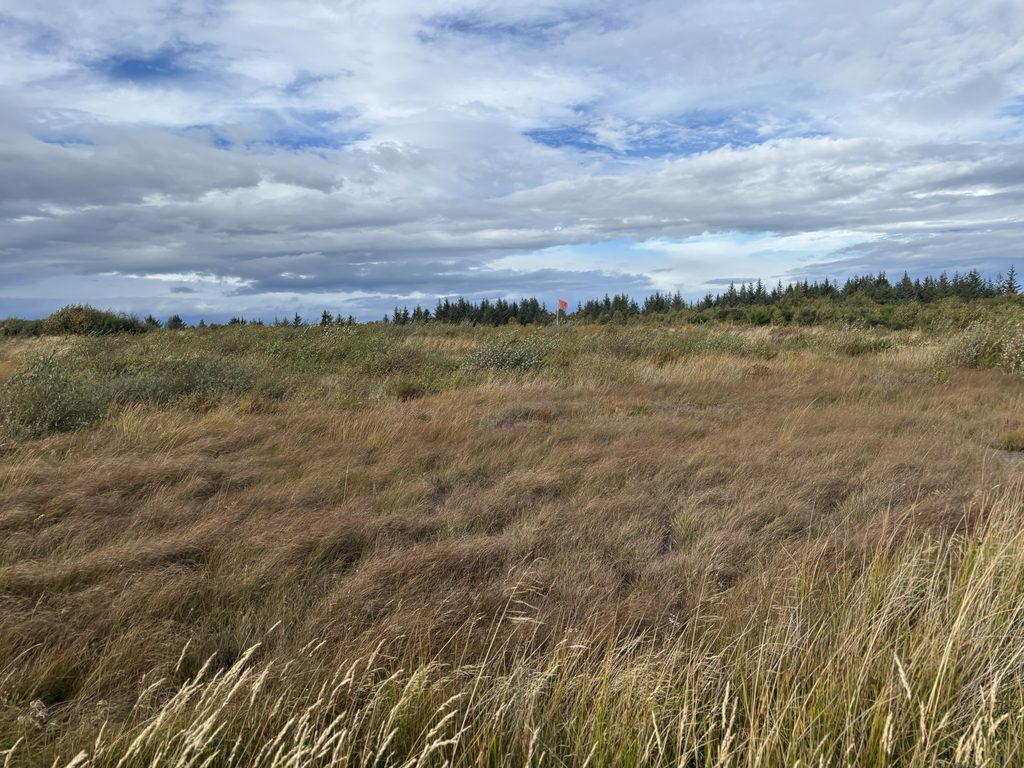
See that red flag? That’s one of several that marked the estimated position of the line of British soldiers. You can’t see it, but that grass between here and there isn’t on dry ground. It’s wet. Like standing water wet. Walk into that grass and you’ll be up to your ankles, your knees, maybe even up to your waist in muck. Try as I could, I wasn’t able to convince Cheryl we should try running across that muck, screaming and yelling in a “Highland Charge”.
And right there is where all the things that young man hollered at us over the whipping gale came to me.
A trained British army stood at one end of this field. Prepared and determined.
A starving, cold, and exhausted Jacobite army stood at the other end. Passionate but desperate.
Men and boys charged across a space into nearly certain death.
No quarter.
Officially, 1500 Jacobites died in only 45 minutes. Nearly half of them in less than 5 minutes during a brutal hand-to-hand clash at the British line. Officially, only 50 British soldiers, although recent investigations suggest it may have been closer to 200. British accounts at the time attempt to minimize the effort expended to put down this uprising, what was closer to a civil war than a fight for Scottish independence. Bonnie Prince Charlie had the thrones of England, Ireland, and Scotland in his sights – not an independent Scotland.
But these things are true.
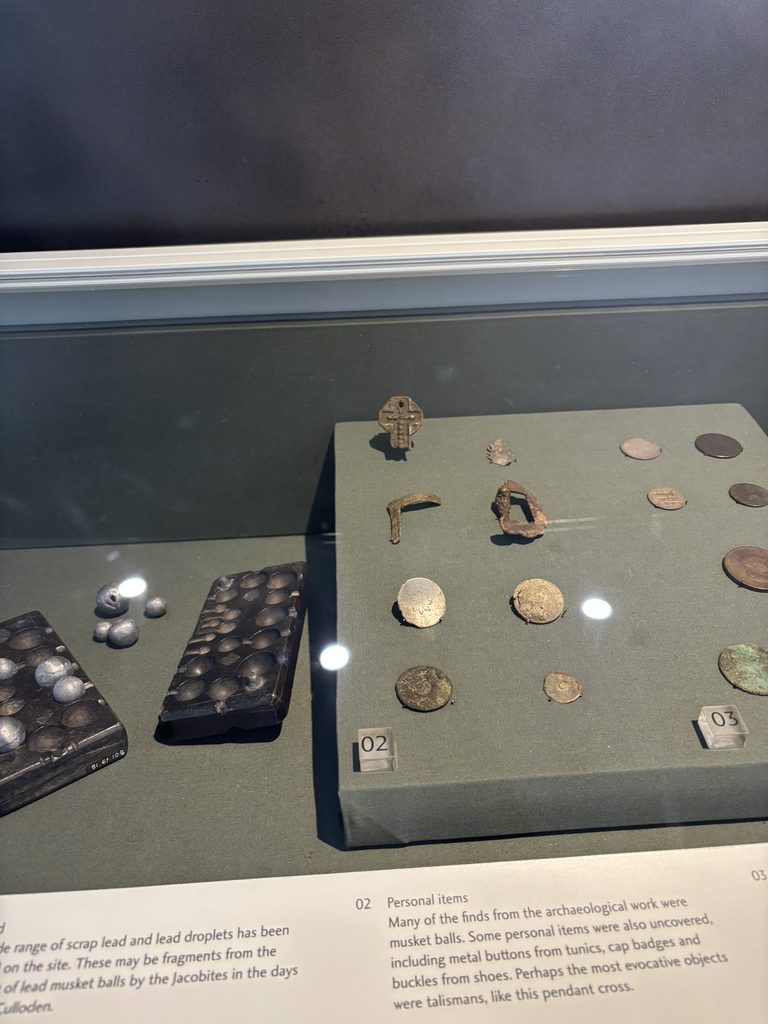
On that day, someone carried this cross into battle. Nearly 2,000 didn’t carry anything away.
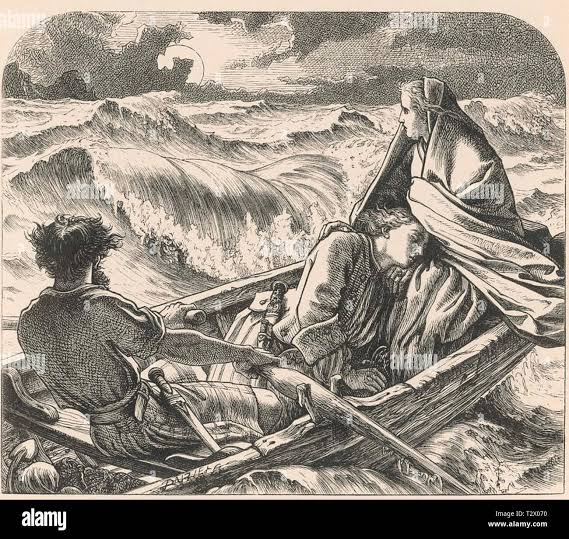
Five months later, and 280 years ago on my birthday this year, Bonnie Prince Charlie left Scotland, never to return.
And the beginning of a desperate time for Scotland began, especially for the Highlanders who, despite not being the exclusive supporters of the Jacobite uprisings, were held out by the British as such.
For me, this trip is as much as anything else a trip through time to connect with those Highlanders. Not just with tartan and kilt, but with the hills, valleys, beaches, rivers, stones, and homes.