
(Oct. 1st, 2026)
Unfortunately, the parking for Stirling Castle is currently closed to regular patrons, so we knew we wouldn’t be able to get close. Much like Edinburgh Castle, Stirling is on the top of a hill. It really is the best place for a castle when you’re trying to gain command of the surrounding countryside (maybe not Invergarry, but more on that in another post). This meant that we knew Cheryl simply wouldn’t be up for the hike and hillclimb, so we parked in a local Park and Ride lot, Cheryl took some more time to rest and recover and paint, and I rode the bus up to the castle.
Well, not really TO the castle. The bus drops you off in town, down the hill, next to the Old Jail. And the bus ride was the first amazing event. I am telling you right now that I wouldn’t drive our rented camper van through the streets of old Stirling where this driver was able to fit a full sized public transportation bus. Single lane streets, literally inches on both sides of the bus, and hairpin turns.
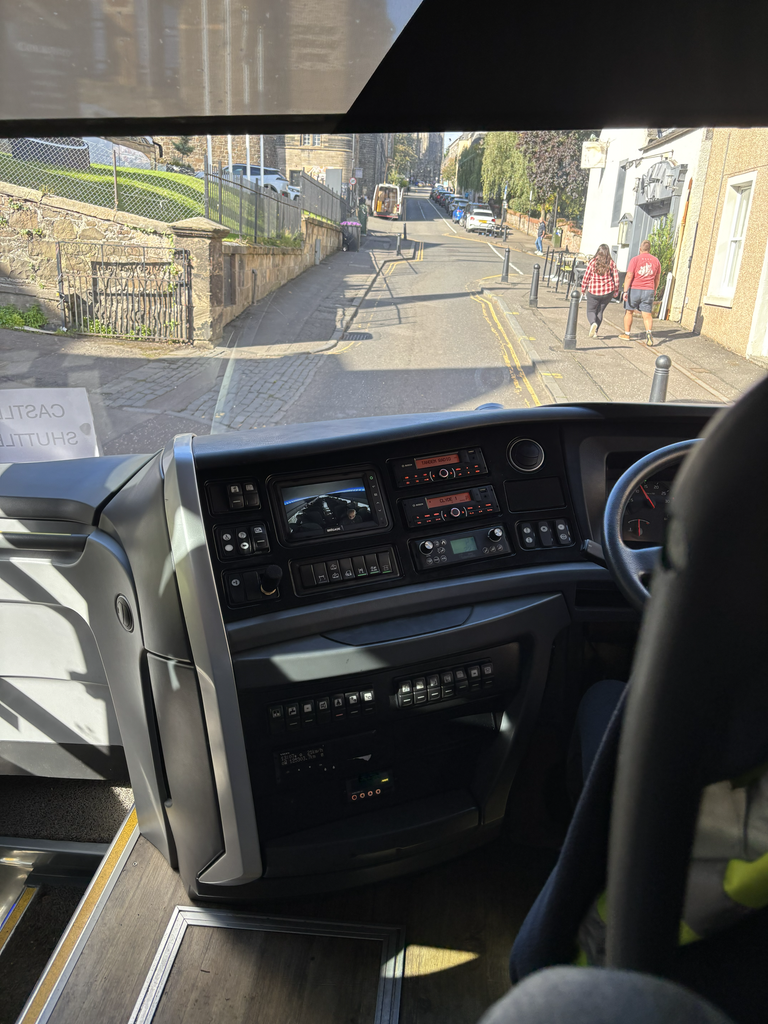
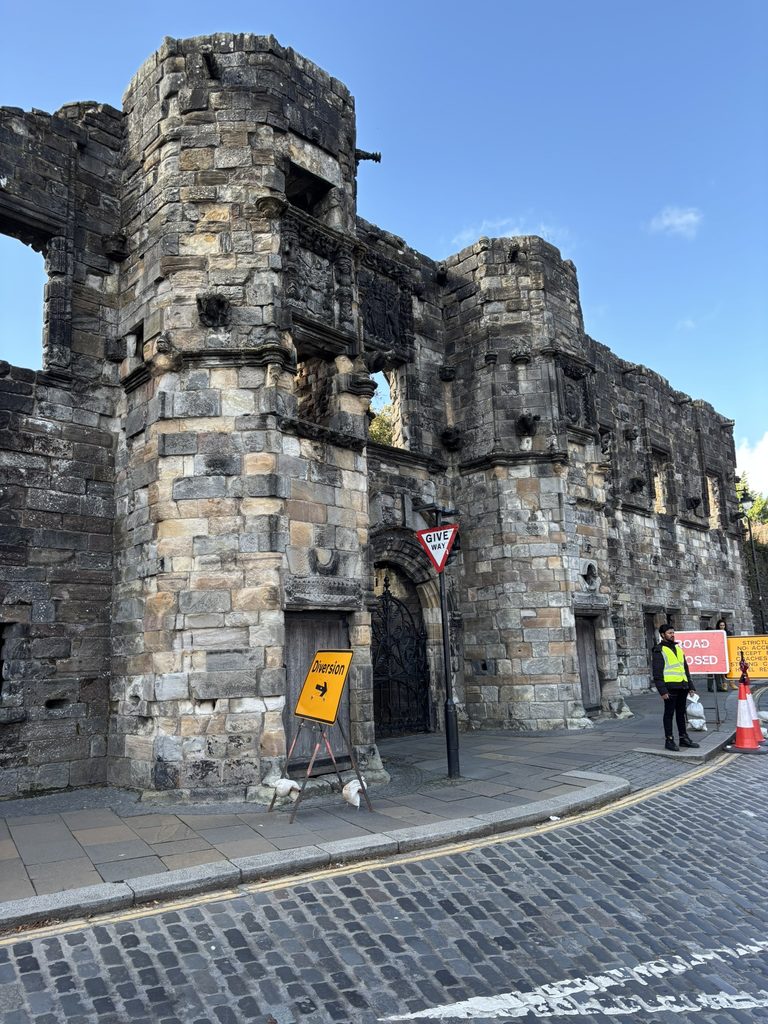
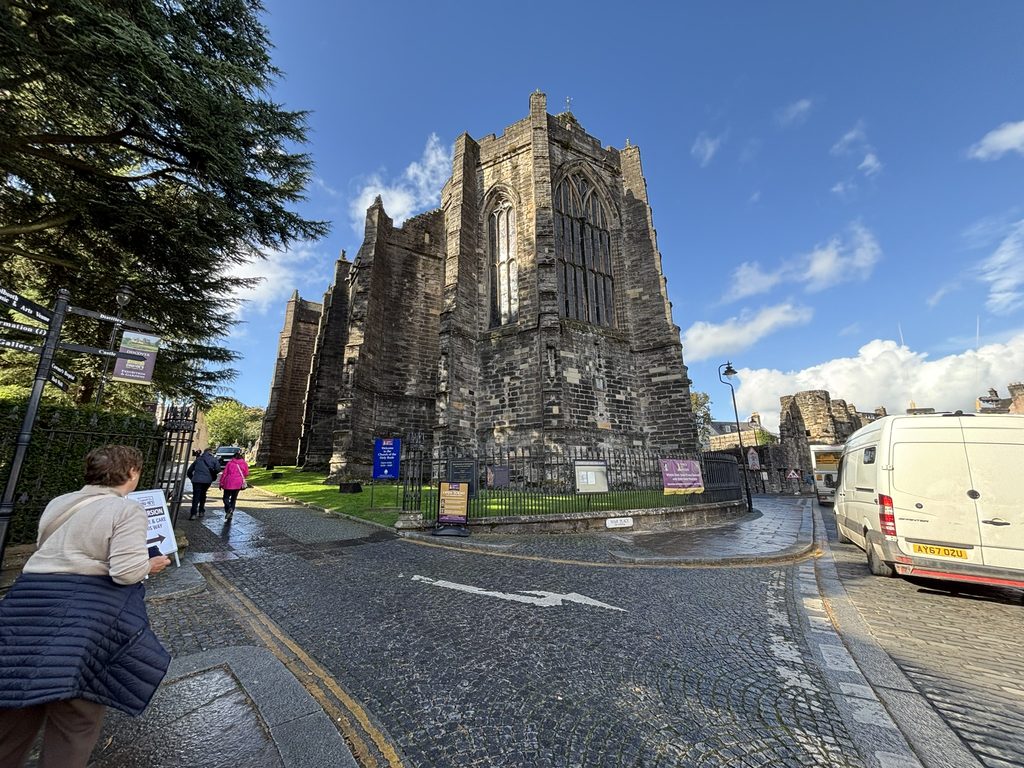
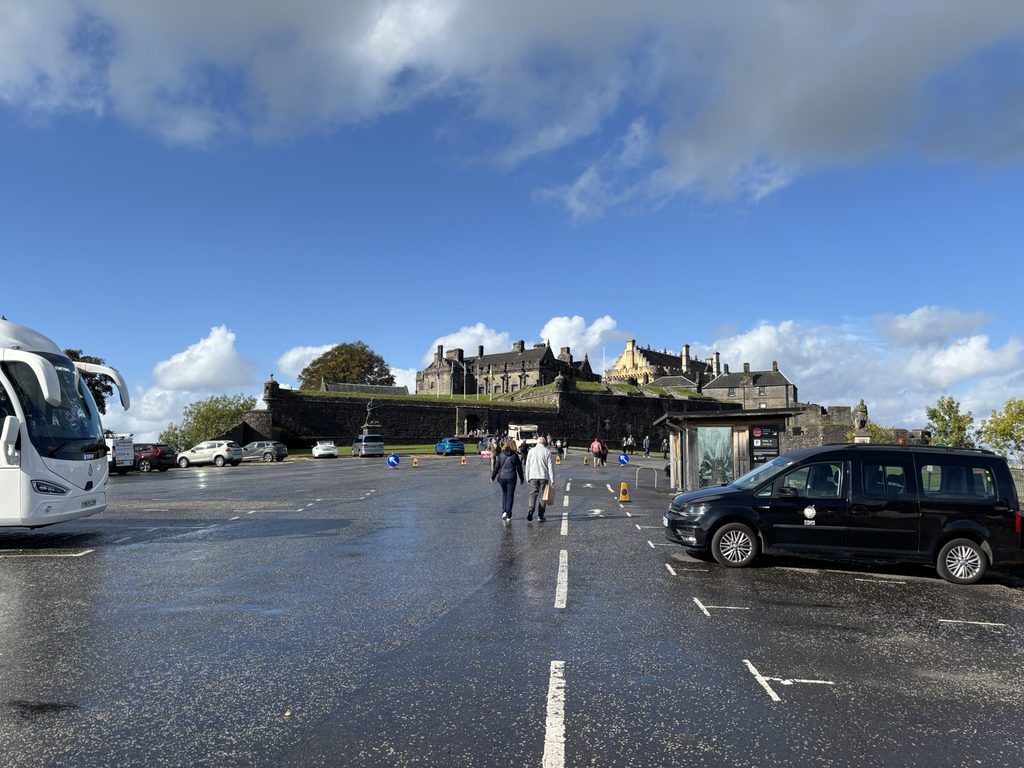
So I hike up the hill, past the Old Jail, past the Mars Wark, past the Church of the Holy Rood and neighboring cemetery, up the stairs, across the parking lot (appears to be fully functional, by the way), and to the castle.
Of the two of us, I’m the history/archeology/architecture/physics nerd. Cheryl probably has a better formal understanding of the forms of architecture. I love to put my feet where other feet have been and worn depressions in the steps, stick my head inside odd doorways and niches, look up close at how stone and metal were joined, and generally geek out on old structures.
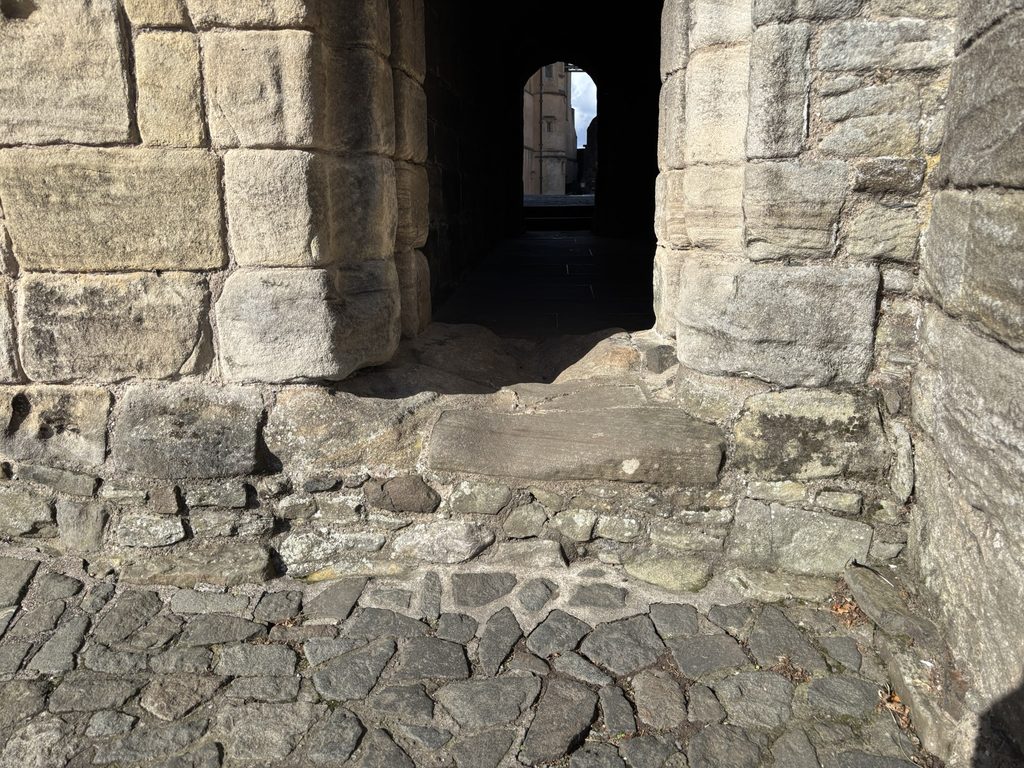
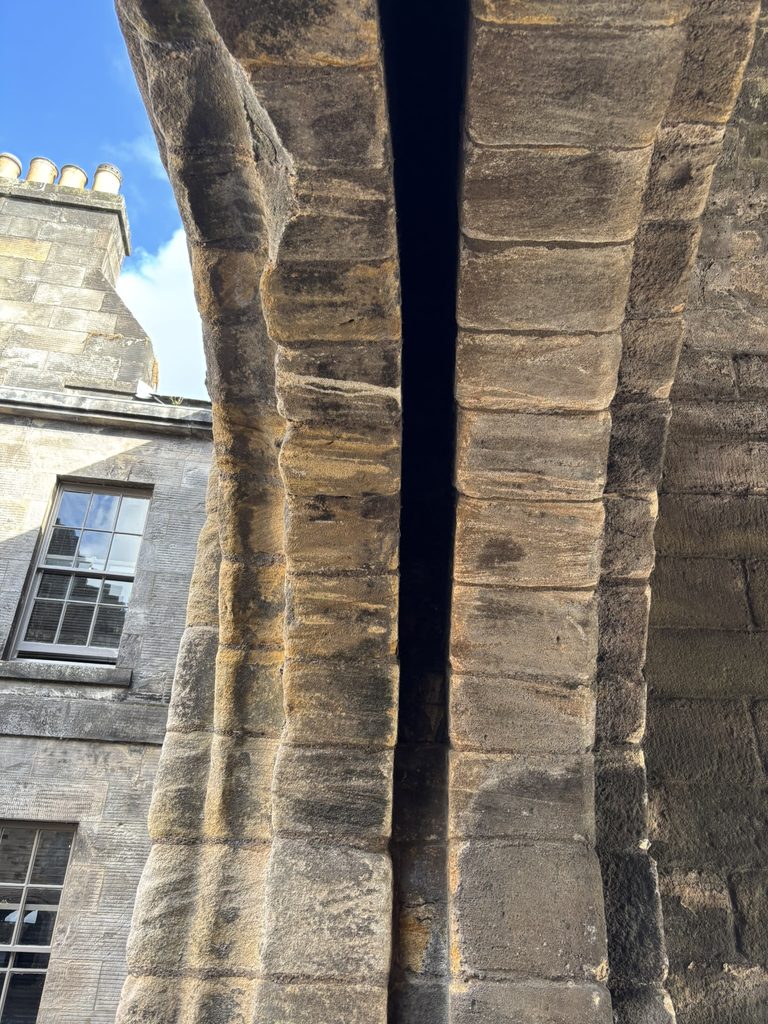
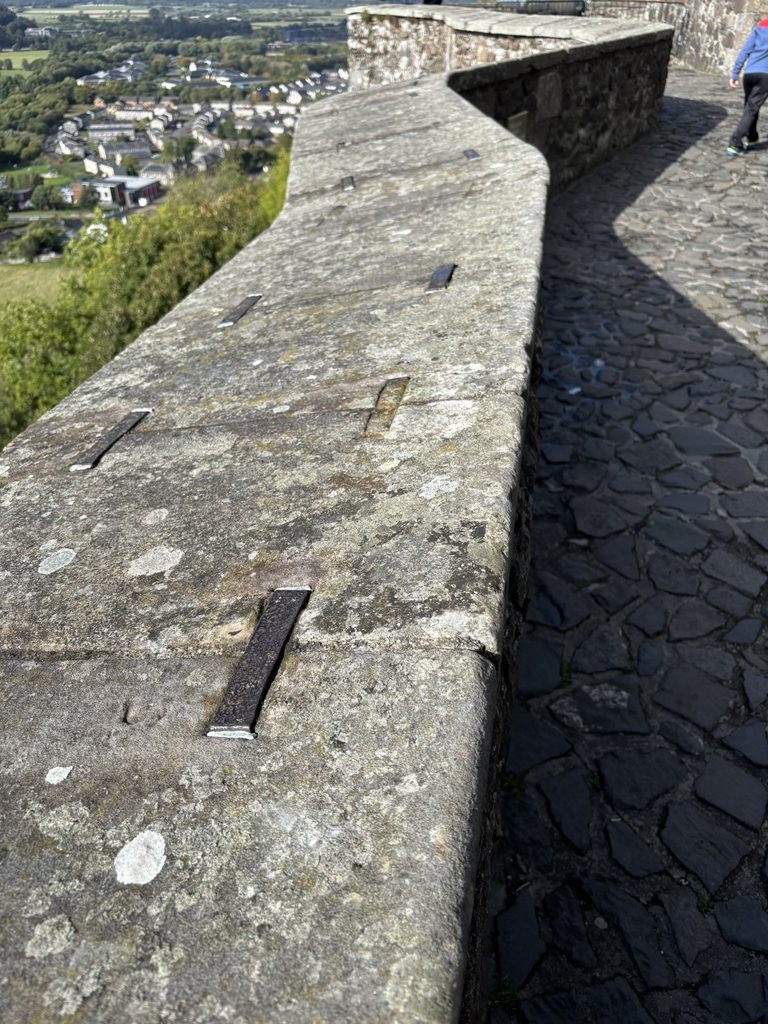
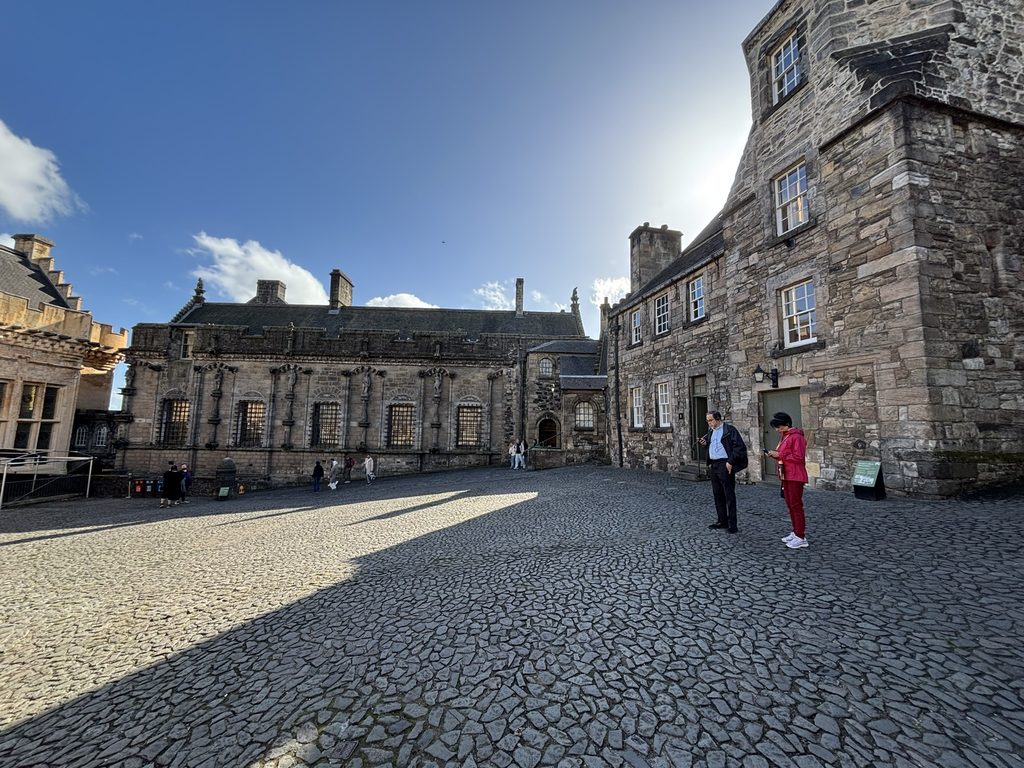
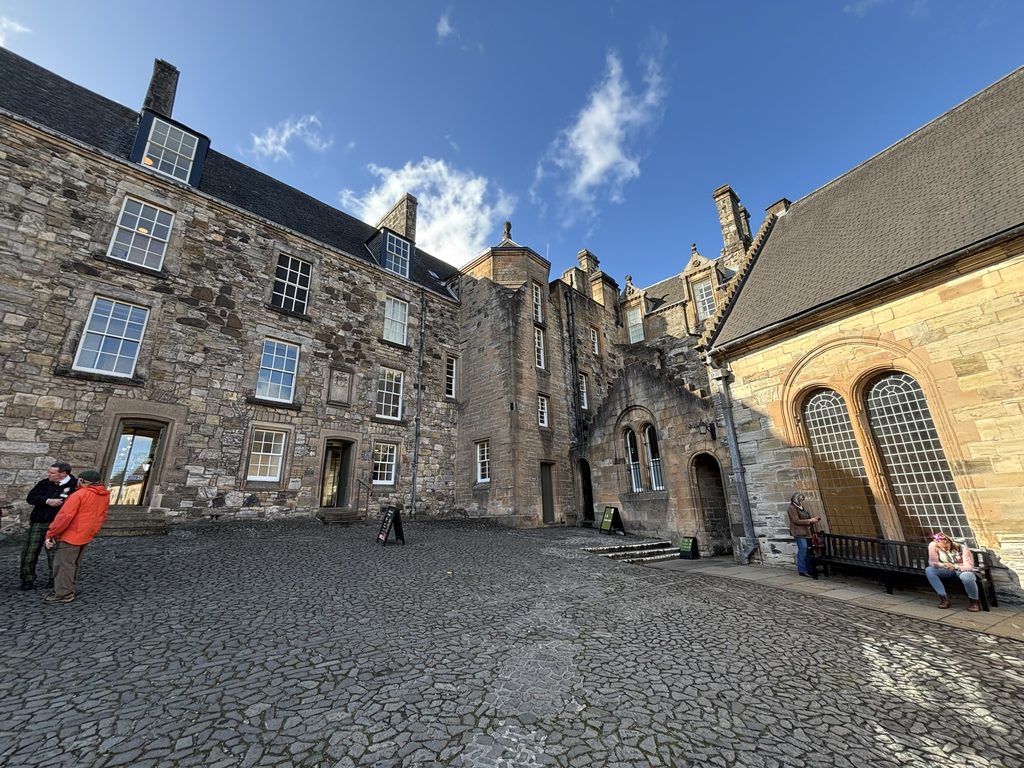
In no way am I attempting here to give an accurate historical accounting of Stirling Castle… here’s my own takeaways. The inner close of the castle is primarily formed by 4 buildings, each from a distinct historical age, and exhibiting distinct architectural approaches. The Kings Old Building, the Great Hall, the Royal Palace, and the Chapel.
Surrounding all of this are the outer works, the fore works, the gun batteries, gardens, and other sundry works that a true history professor would be able to speak for hours about. I’m just going to give you my quick takes.
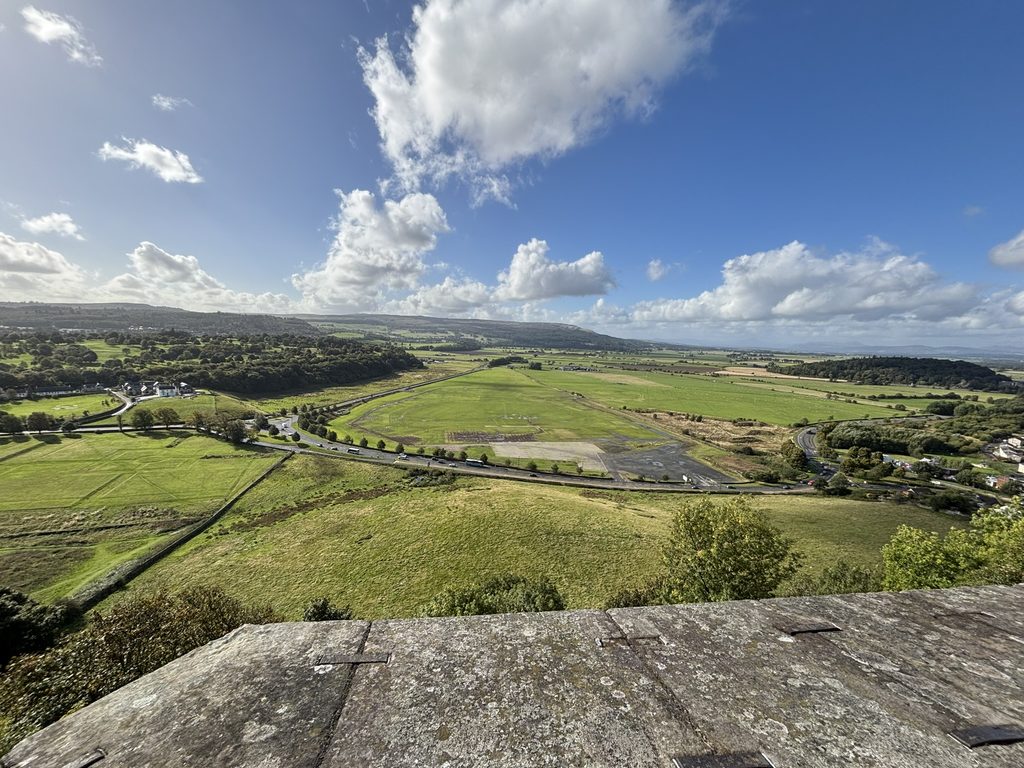
The outer works/fore works. This is classic “Castle” proper. I had to stop and look up into the slot where the portcullis would have been retracted, go back round and walk through both of the side passages that would admit pedestrians when the main gates were closed. I walked the full way around the outer walls, getting a panoramic view across the Stirling battle grounds, Bannockburn in the distance, the Wallace Monument on a distant hill.
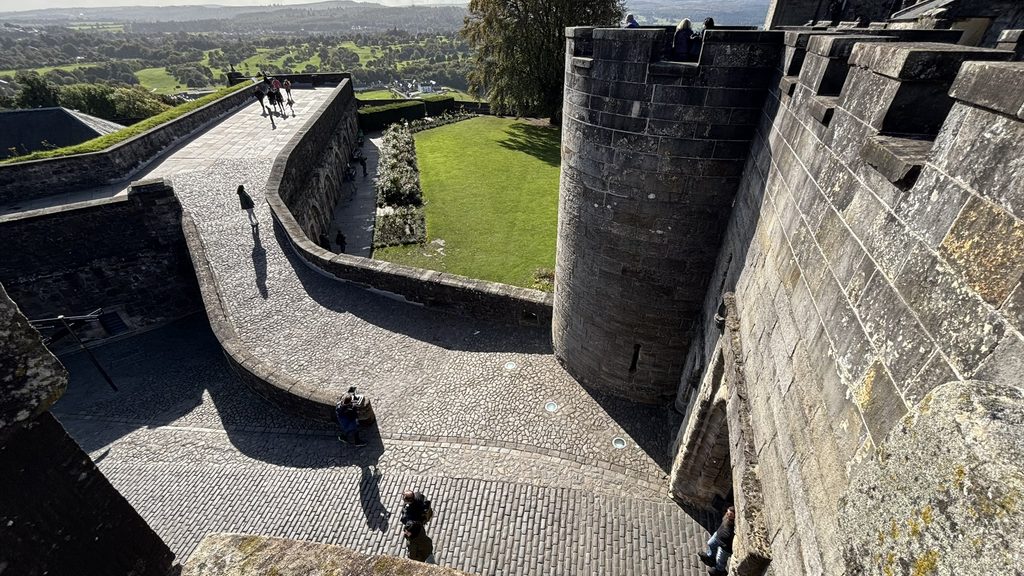
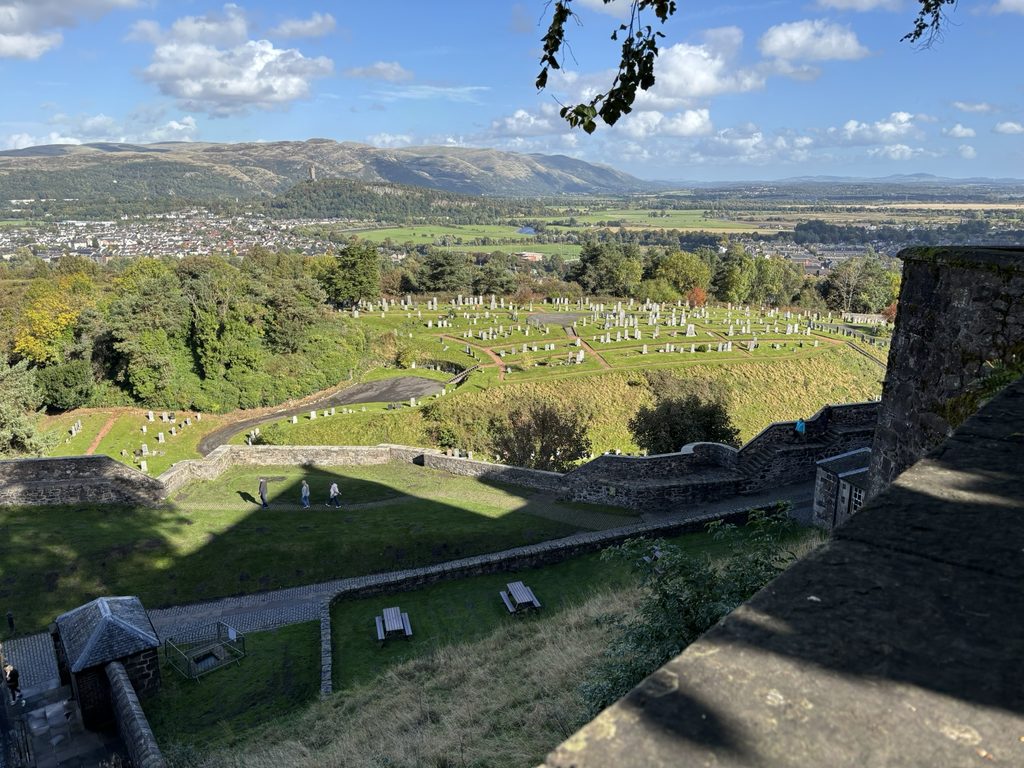
Kings Old Building: I didn’t go in. Inside this is the Regimental Museum. I knew I couldn’t spend an hour in there. But the outer construction is fascinating in the visible stonework and masonry.
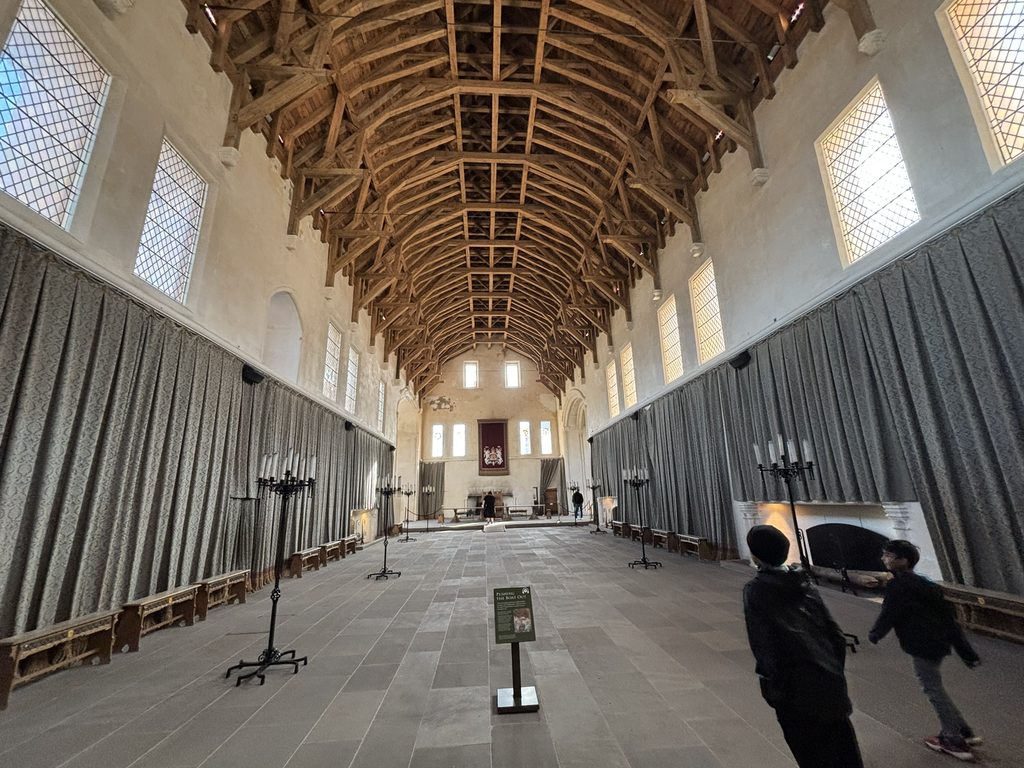
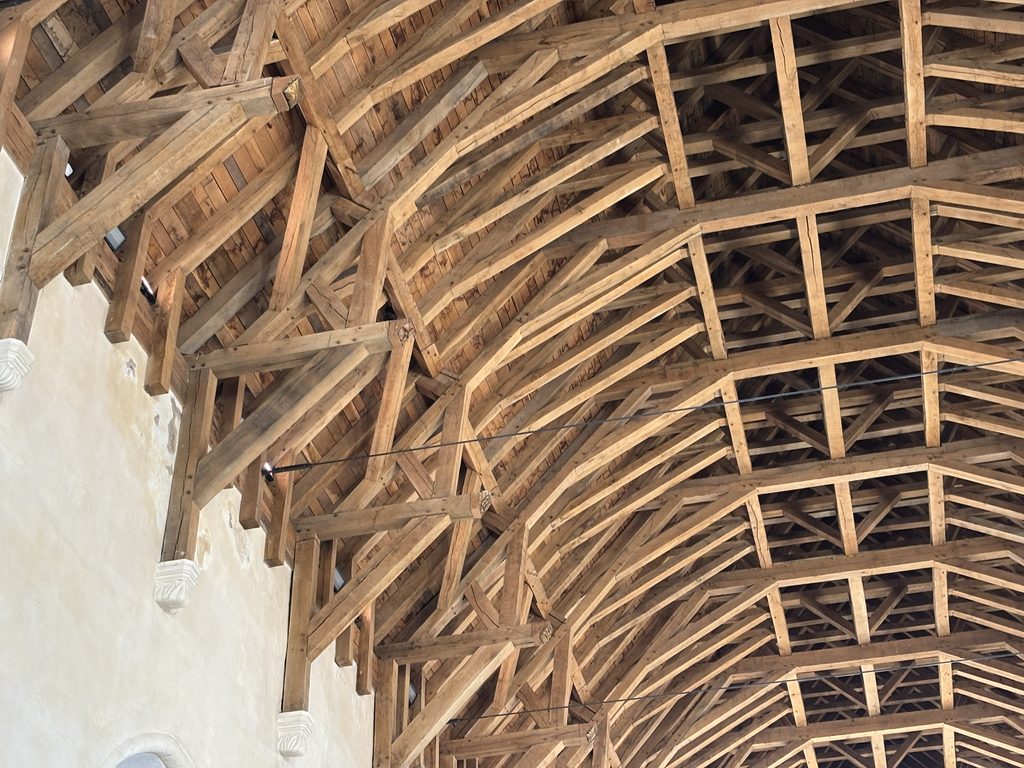
The Great Hall: Huge – I understand they wheeled an entire wooden ship into the hall once, just to serve seafood to the guests. The reconstructed hammerbeam roof actually reminds me of ship contruction.
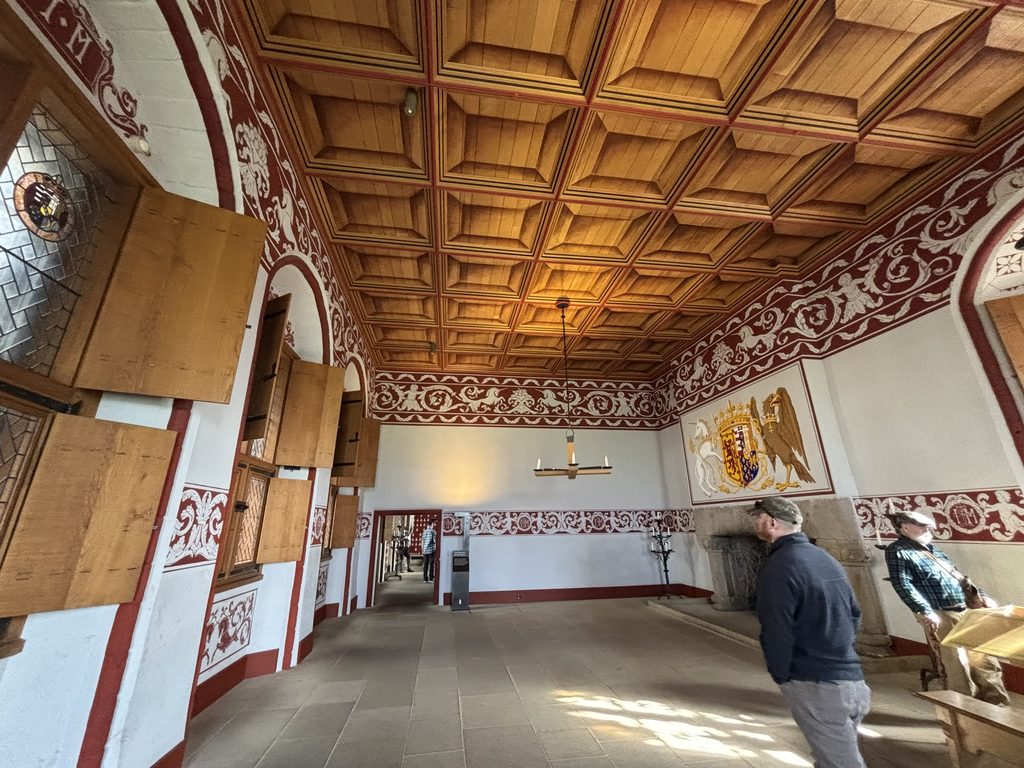
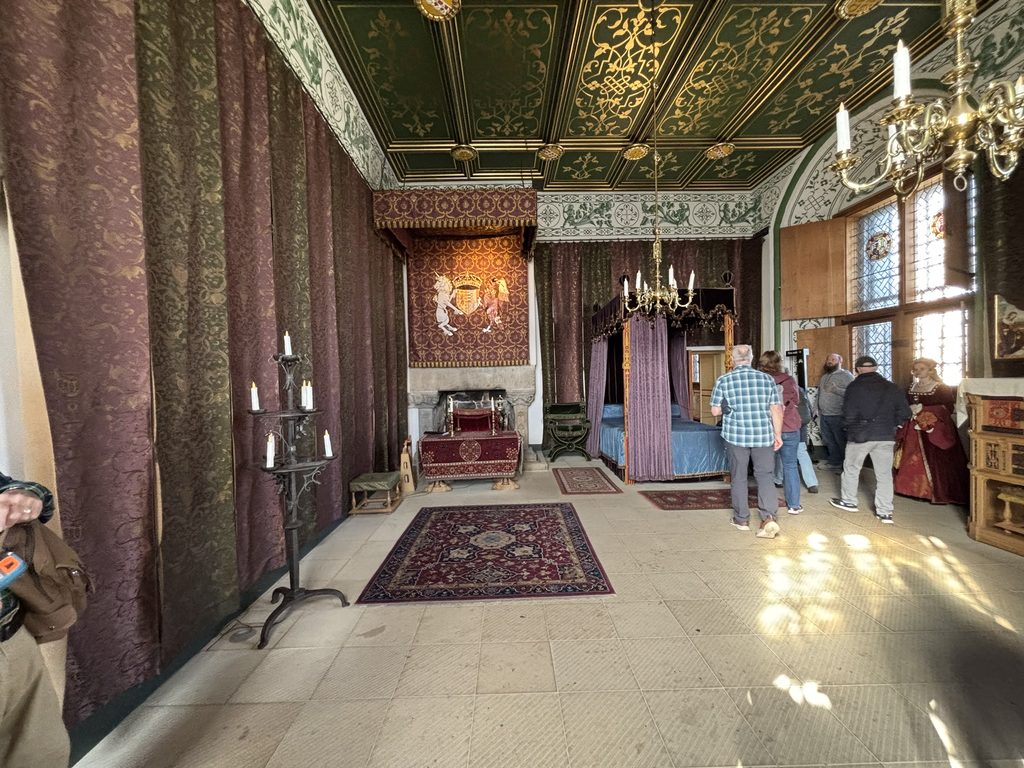
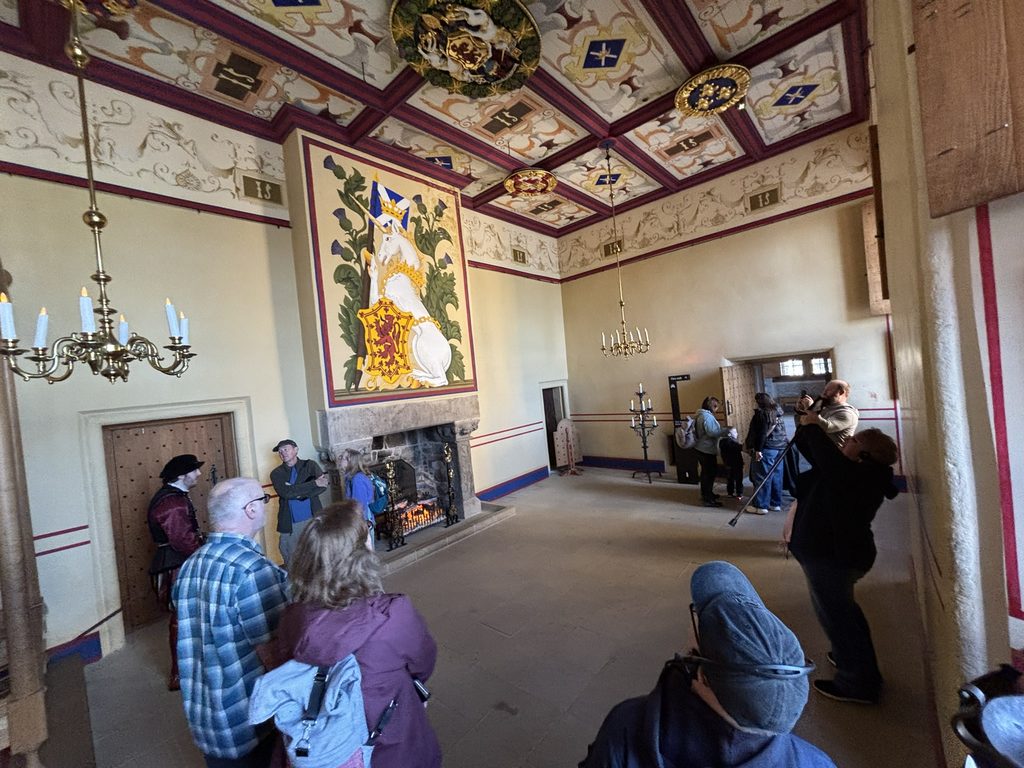
The Royal Palace: Honestly I’m not sure what I was expecting. The sign coming in said the “Royal Apartments”. I was expecting living quarters. What I saw were 6 remarkably large, and equally remarkably EMPTY rooms. Three each (for the King and for the Queen) Outer hall, Inner hall, and “Bedchamber” (they didn’t actually sleep there, from what I read). What really struck me first was the smooth and finished interior walls. I already knew that what we often see as the interior walls of old castles isn’t what it looked like when they were occupied. The interior plaster surfaces are the first to fall apart and crumble after years of disuse. But now I could see with my own eyes, and touch.
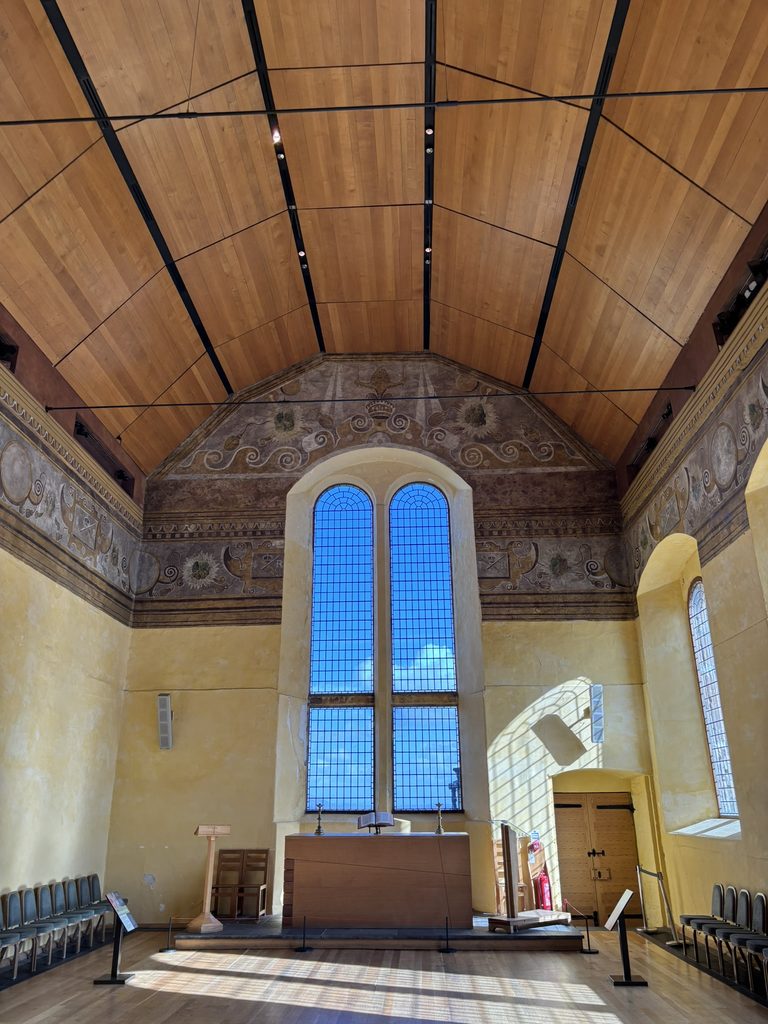
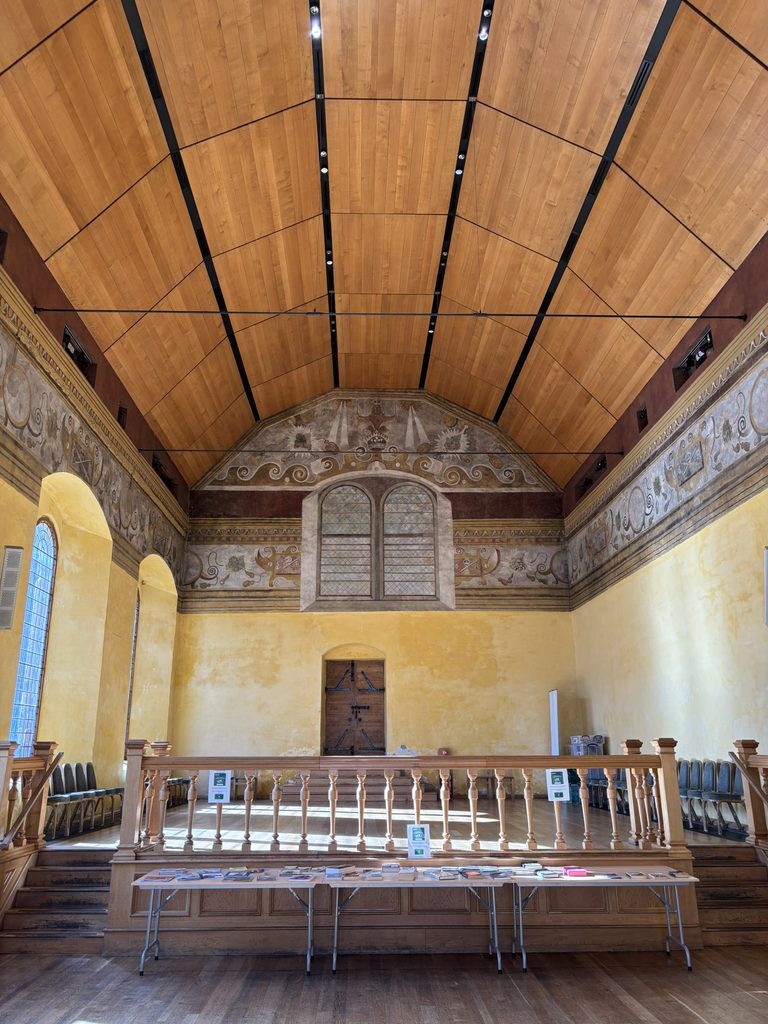
The Chapel: Again, remarkably empty, but still impressively large. Still, standing in the room where some history changing coronations occurred was humbling.
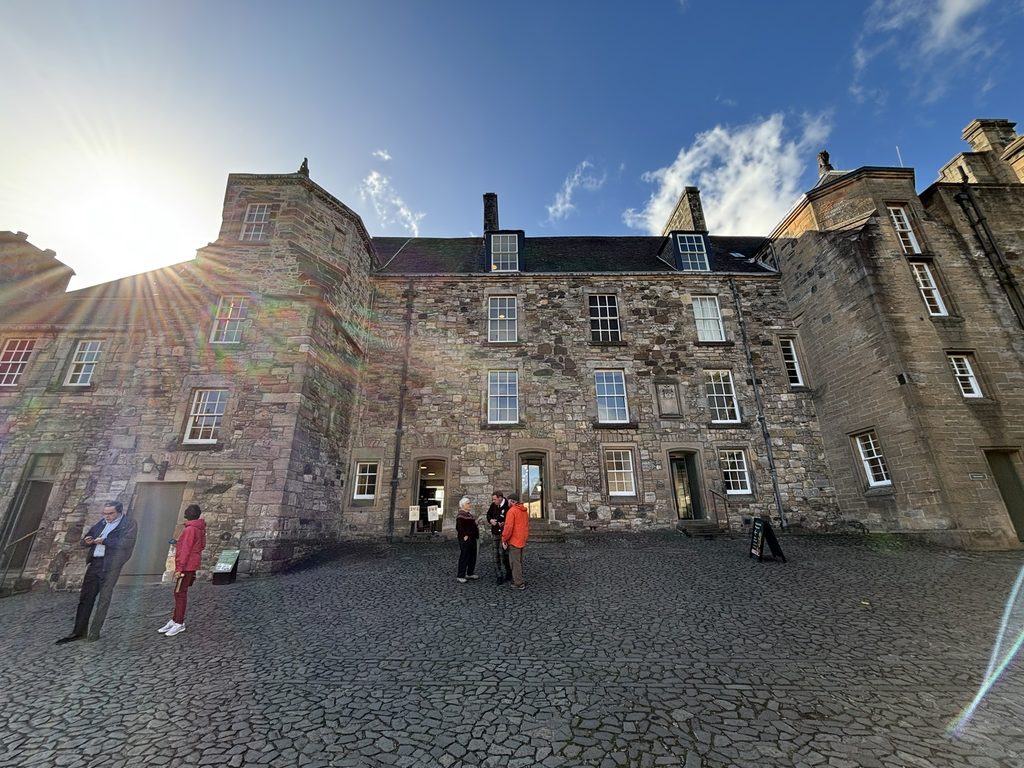
But the Inner Close (the gathering space bordered by these 4 buildings) is where it all comes together. Standing here, you can see the contrast between each different building where they join at the corners, interspersed by the older (yet constantly reconstructed) defensive works surrounding them.
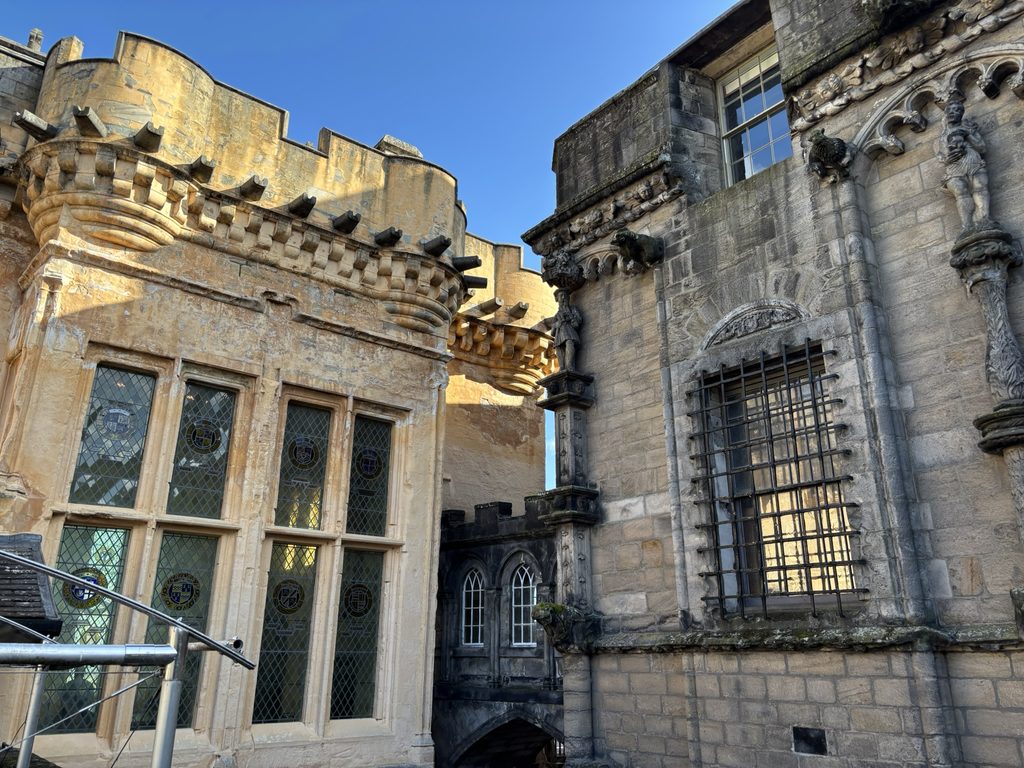
I still have to sort and pick out my favorites from the literally hundreds of pictures I took, but I’ll be back here to drop some soon (done now!). The last 3 days we’ve had amazing picturesque views, and equally dismal connectivity.
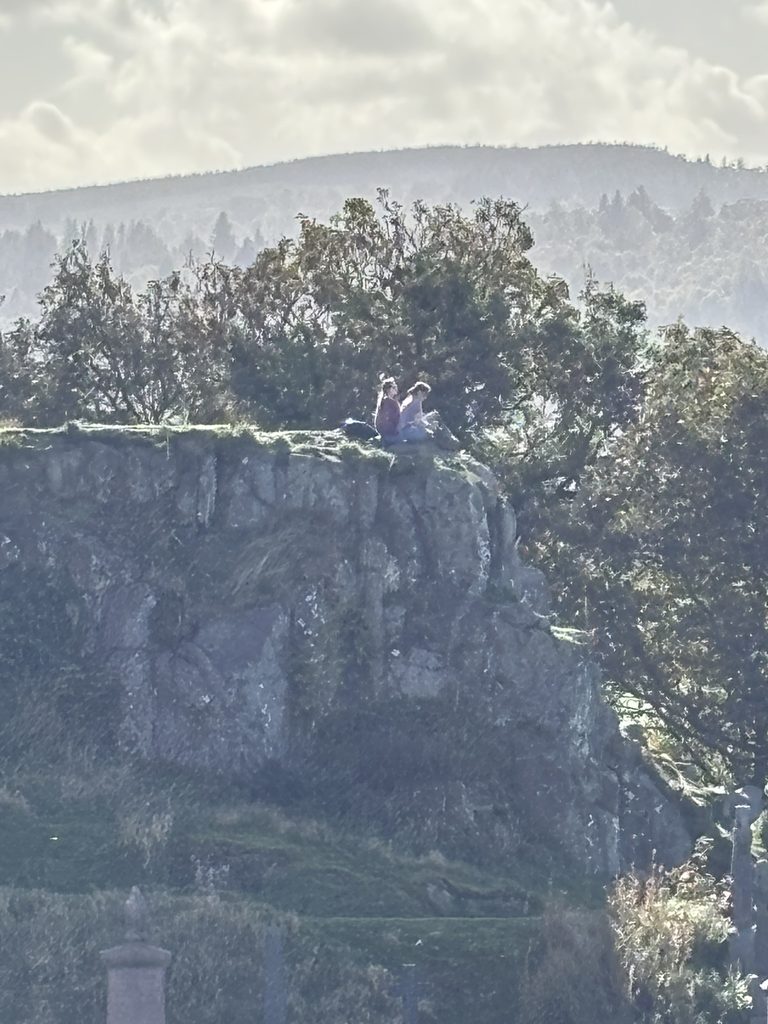
Oddly, this is one of my favorites. These intrepid individuals found a front row seat to each lunch, overlooking the cemetery of the Church of the Holy Rood and the Castle itself. Lunch probably never tasted so good.
I’m a bit behind on my blogging, and Cheryl has already made her observations on this topic, but up to now this has really just been a prelude. Where this trip really starts to come together for us is as we leave Stirling… so stay tuned. Stirling is the gateway to the Highlands, and the Highlands and Islands is what this trip is really all about.